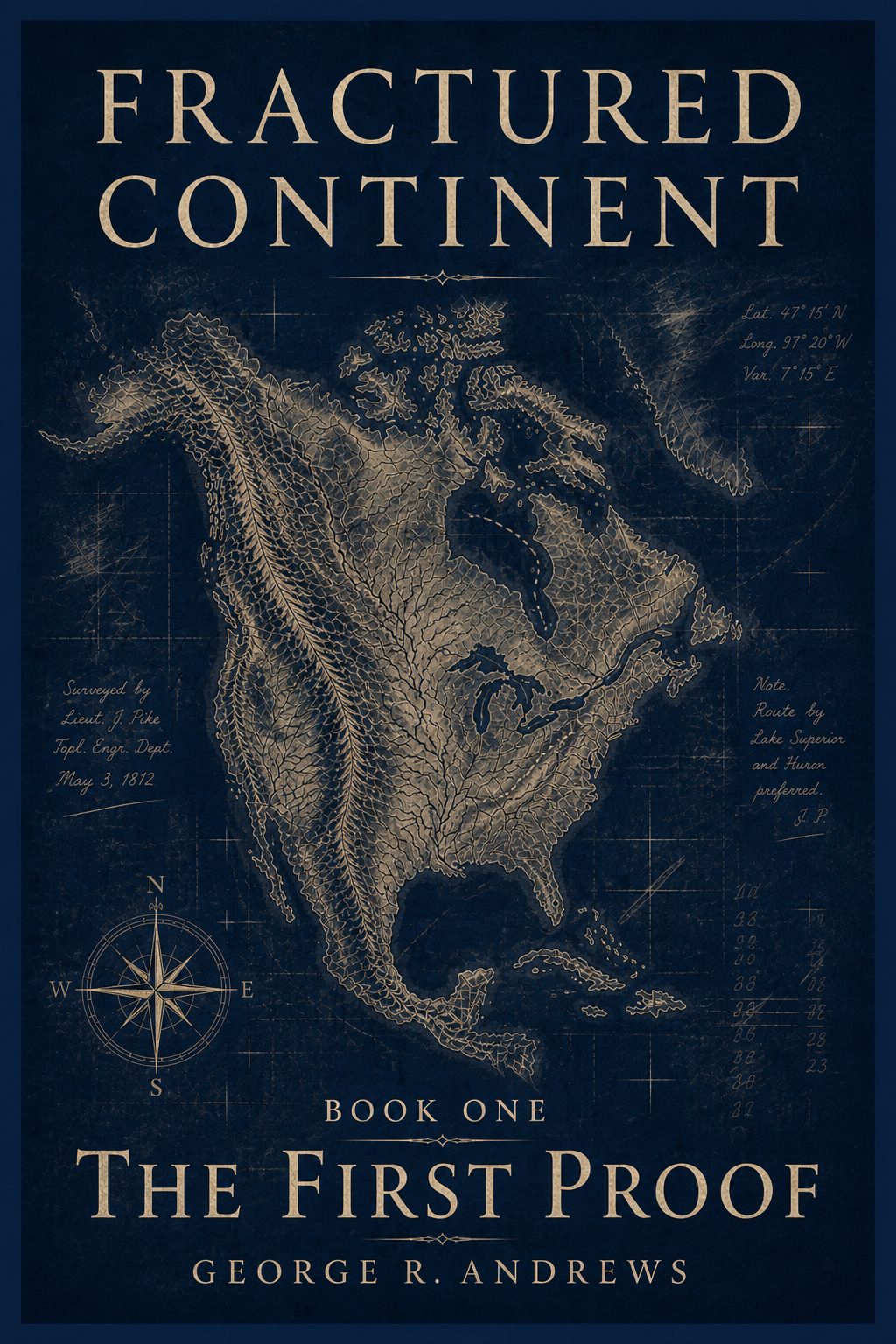
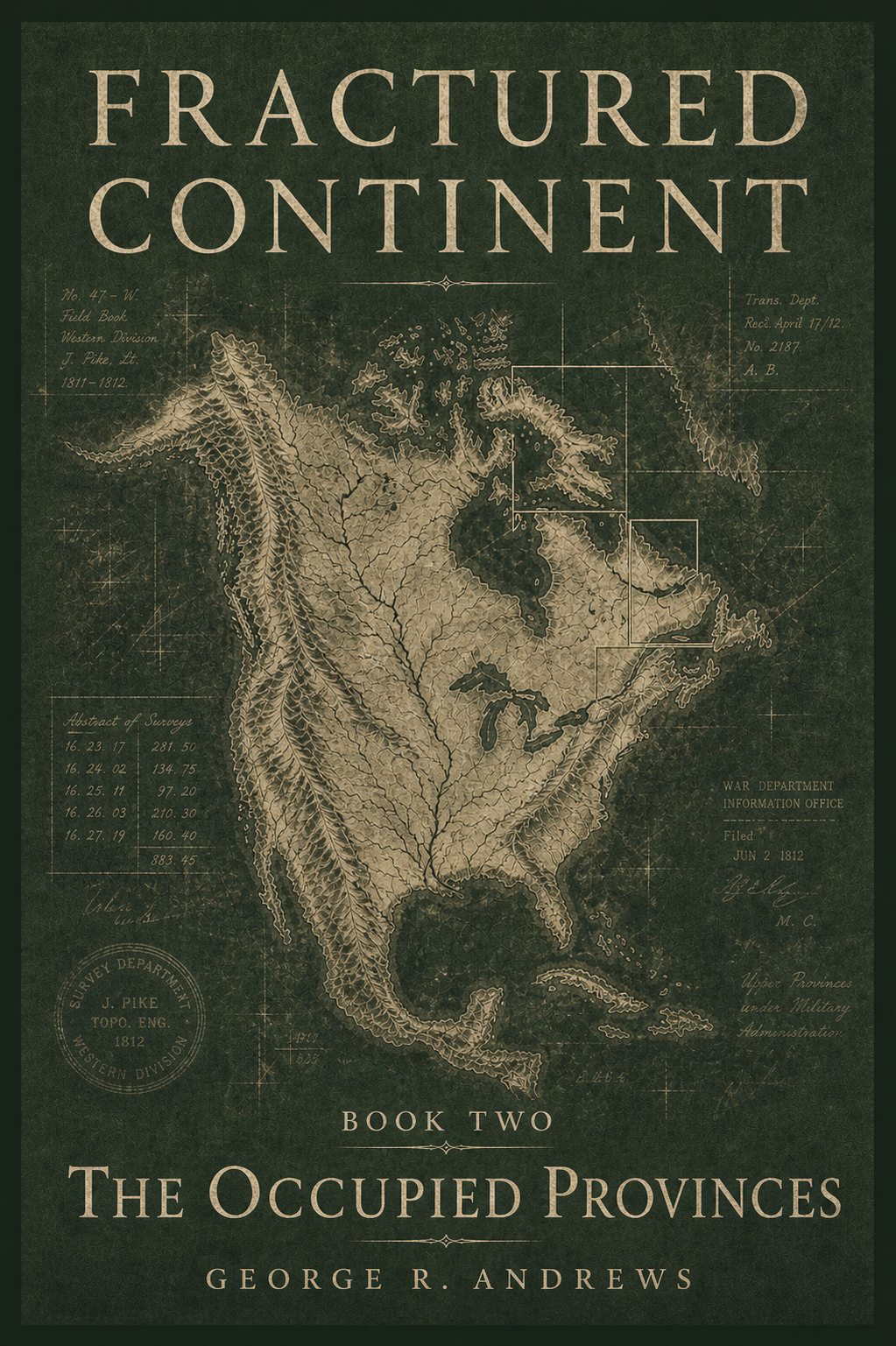
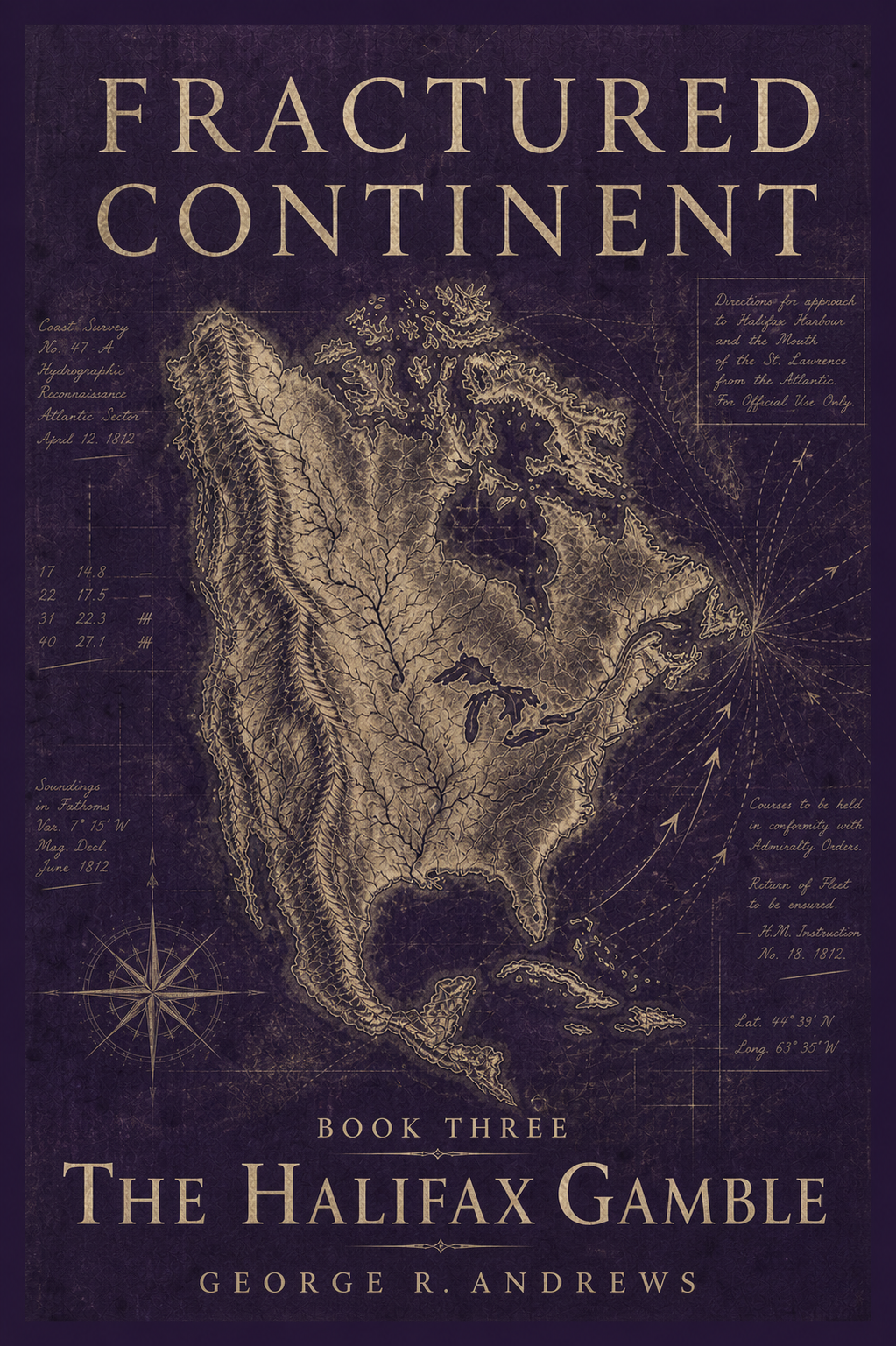
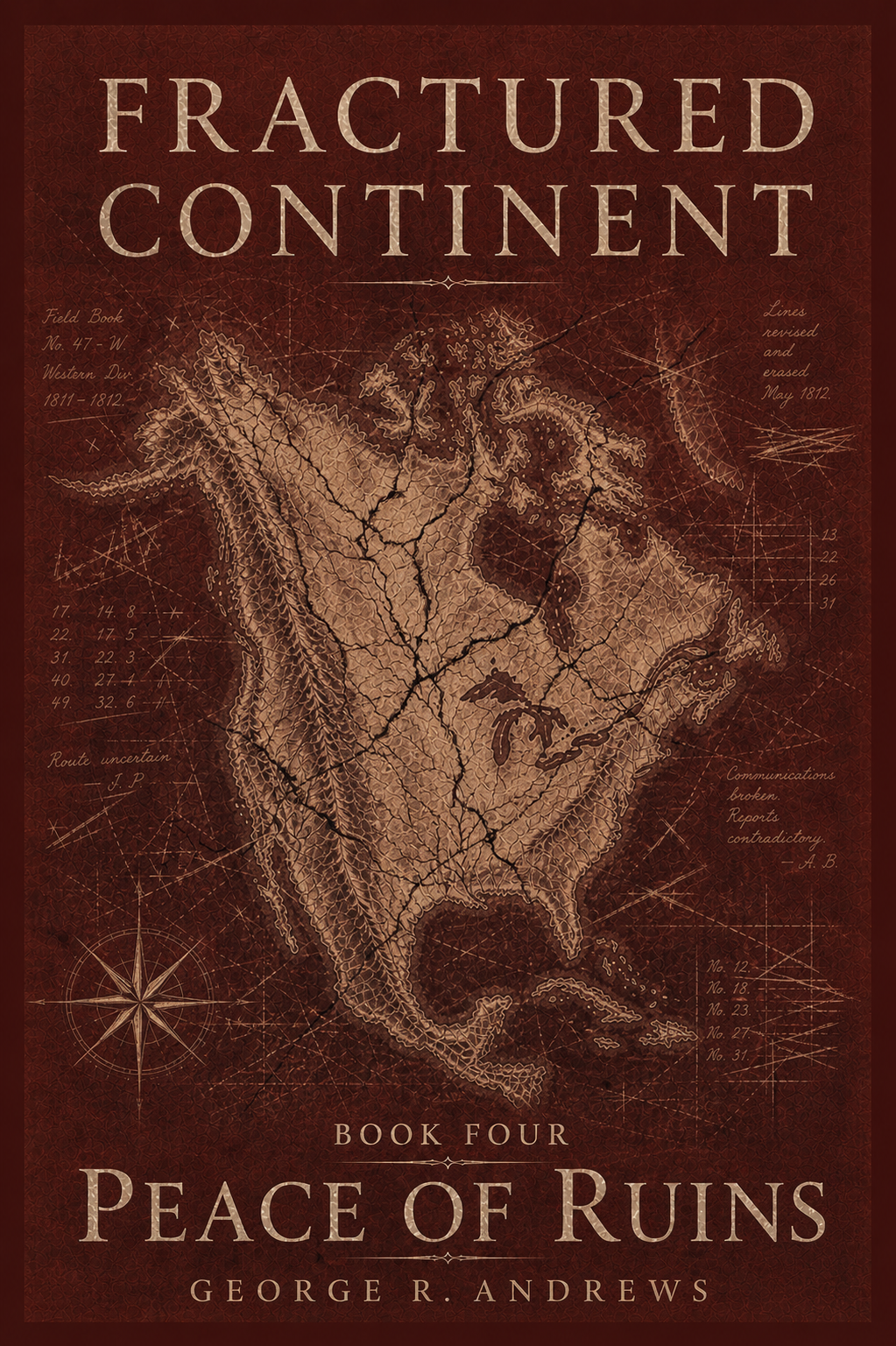
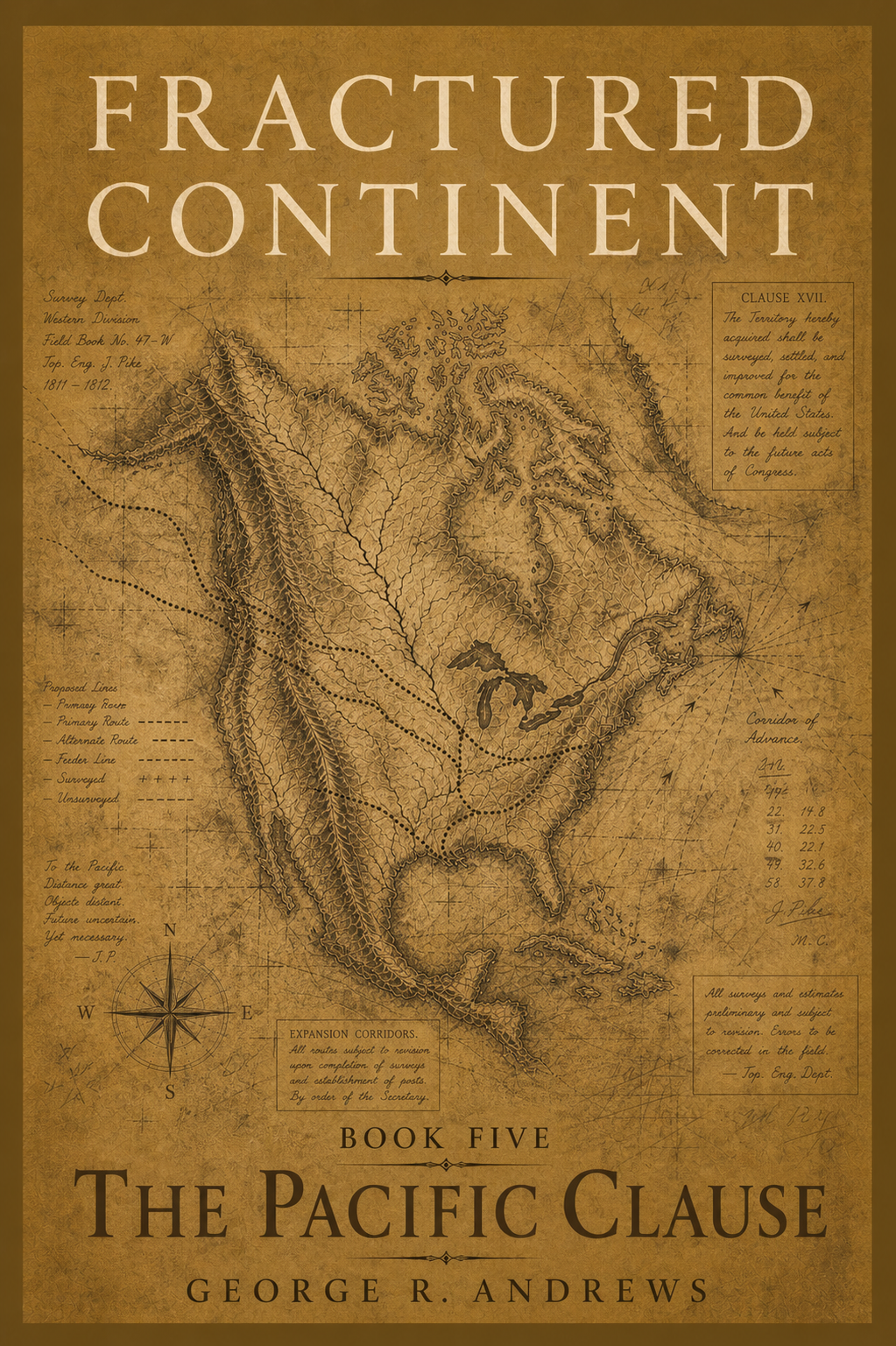
Fractured Continent is a serious alternate-history series about the long consequences of one altered decision.
In recorded history, the early United States entered the War of 1812 with ambition larger than its military machinery. In this reimagined North America, Washington learns a different lesson in the decades before the war. The young republic still fears standing armies and still speaks the language of liberty, but it invests earlier in trained soldiers, officers, depots, roads, magazines, supply lines, and the dull practical systems that decide whether campaigns succeed or collapse. That narrow change bends the continent.
When war comes with Britain, the United States is not invincible. It is simply prepared enough. The War of 1812 becomes something colder than a failed invasion. It becomes proof that competence can turn ambition into conquest. Upper and Lower Canada fall. Montreal, Quebec, Kingston, York, and the St. Lawrence are drawn into the American system, while Britain is driven back to Halifax, a harbour of exiles, claims, naval patience, and unfinished purpose.
For half a century, the United States teaches itself that possession has become belonging. Schools print the lesson. Courts administer it. Roads, tariffs, censuses, uniforms, elections, and anniversaries make the conquered provinces look settled.
They are not settled.
When the American Civil War begins, the old wound opens. The Canadas rise, but not as one people with one dream. French Catholic parishes, Upper Canadian merchants, smugglers, clerks, priests, printers, soldiers, restorationists, frightened pragmatists, and political idealists all argue over what freedom should mean, who may claim it, and what price survival can bear. Halifax sees its chance. Britain returns, first through shadow and then through ships, money, papers, convoys, advisers, and guns. But Britain is no clean rescuer. Its help arrives with ledgers, clauses, debts, port rights, and imperial appetite folded between the lines.
Across five volumes, Fractured Continent follows the collapse of one continental order and the birth of another. The First Proof shows how preparation turns into conquest. The Occupied Provinces explores the long pressure beneath enforced belonging. The Halifax Gamble follows rebellion as it accepts help that may save it and bind it. Peace of Ruins asks what peace costs when treaties become quieter weapons. The Pacific Clause turns west, where every surviving nation claims to have learned from conquest while preparing to repeat it.
This is alternate history with moral weight: not a flag-swapping fantasy, but a human and political reckoning. Its drama lies in roads, dispatches, classrooms, harbours, family tables, courtrooms, treaty drafts, burned bridges, railway promises, and the private moment when ordinary people realise the map has been lying to them.
Fractured Continent is for readers drawn to historical fiction about power, memory, loyalty, empire, and the uneasy truth that every victory leaves a debt, every treaty hides a future quarrel, and every border is drawn through someone’s home.
1The First ProofAn army can make conquest look like policy.
The First Proof
The First Proof is the opening volume of Fractured Continent, a serious alternate-history series about war, memory, conquest, and the uneasy stories nations tell about themselves.
In recorded history, the United States entered the War of 1812 with ambition larger than its army, relying heavily on militias, political enthusiasm, and improvisation. In this altered North America, Washington learns a different lesson before the war begins. Roads are studied. Magazines are stocked. Officers are trained. Supply lines are made real. The young republic still fears standing armies, still speaks the language of liberty, and still quarrels with itself, but it begins to accept that a nation unprepared for war may not control what war becomes.
When conflict comes with Britain, the result is not easy triumph. It is something more unsettling: competence in service of appetite.
The First Proof follows the people caught inside that change: soldiers marching through weather and uncertainty, clerks turning ambition into orders, commanders discovering what preparation can make possible, and civilians learning that maps are never innocent once armies begin to follow them. The novel moves through roads, rivers, lake campaigns, frontier posts, political rooms, occupied towns, treaty drafts, and the quiet spaces where public victory becomes private loss.
This is not alternate history built on spectacle. It is a grounded, morally serious reimagining of North America, where small institutional decisions carry vast consequences. A depot matters. A road matters. A badly copied name matters. So does the sentence that makes conquest sound like policy.
At its heart, The First Proof asks what happens when a republic proves it can take what it once only imagined. What does victory cost when it becomes a lesson? What debts are hidden inside treaties, schoolbooks, flags, and official maps? And how long can a nation call possession belonging before the people beneath that claim answer back?
Rich in historical texture and restrained in tone, The First Proof is for readers who want alternate history with weight: not a fantasy of conquest, but a human, political, and deeply felt account of how one military success can bend an entire continent out of shape.
2The Occupied ProvincesOccupation lasts longest when children are taught to call it peace.
The Occupied Provinces
The Occupied Provinces is the second volume of Fractured Continent, a serious alternate-history series about conquest, memory, loyalty, and the long life of political violence.
Fifty years have passed since the War of 1812 ended differently. Upper and Lower Canada fell. Montreal, Quebec, Kingston, York, and the St. Lawrence were drawn into the American system. What began as military occupation has been softened by time into routine: schoolbooks, courthouses, customs seals, road appropriations, civic anniversaries, federal officers, public ceremonies, and printed maps that insist the old wound has closed.
But paper can only persuade so much.
In the occupied provinces, people have learned to live with two versions of the same country. One version is recited in classrooms and printed in official histories. The other survives in parish bells, family stoves, old names, private letters, stubborn editors, winter roads, and the quiet memory of what was taken. Some citizens have adapted. Some have prospered. Some have waited. Many are caught somewhere in between, carrying loyalty, fear, caution, resentment, and hope in the same tired hands.
When the American Civil War begins, the old balance starts to fail. Washington looks south, but the north has not forgotten itself. Halifax, long reduced to a loyal harbour of exiles and imperial patience, begins to matter again. Merchants, priests, soldiers, printers, clerks, families, and political dreamers all find themselves drawn into a dangerous question: if the provinces were conquered by force, can they be reclaimed by memory?
The Occupied Provinces is not a simple rebellion story. It is a novel about the slow pressure beneath obedience. It asks what happens when a people are told for generations that they belong to a nation that first possessed them. It asks what schoolbooks leave out, what families whisper back in, and what price ordinary people pay when history stops being a lesson and becomes a choice.
Restrained, intimate, and politically sharp, The Occupied Provinces is for readers drawn to alternate history with moral weight: a story of occupied streets, divided homes, borrowed authority, dangerous words, and the fragile courage required to imagine a country before it exists.
3The Halifax GambleEvery rescue carries a price in the hold.
The Halifax Gamble
The Halifax Gamble continues the Fractured Continent series as the rebellion in the occupied Canadas turns from dangerous hope into a continental crisis.
The United States is already fighting for survival against the Confederacy. Now, in the north, the old wound of conquest has reopened. The Canadas are rising, but not cleanly, not simply, and not with one voice. French Catholic parishes, Upper Canadian merchants, smugglers, printers, soldiers, clerks, priests, and frightened families all face the same brutal question: what is freedom worth when the price is not yet known?
Into that uncertainty comes Halifax.
For fifty years, Halifax has been the loyal harbour of exiles, claims, naval ambition, imperial patience, and unfinished purpose. Now it sees its chance. Aid begins to move by shadow before it moves openly: flour that is not only flour, medical crates with more than bandages inside, coded messages, quiet convoys, careful lies, and manifests clean enough for any official drawer. Relief and intervention travel together, and no one can fully separate mercy from strategy.
As British support grows harder to deny, the rebellion gains strength, but also complication. Halifax is not a pure rescuer. Its help arrives with ledgers, clauses, port rights, debts, political expectations, and imperial appetite folded between the lines. Victory begins to seem possible just as its shape becomes less certain.
The Halifax Gamble follows the people caught inside that bargain: those carrying messages across dangerous roads, those trying to feed a country before it fully exists, those turning cargo into policy, and those watching the Union strain under the weight of two wars. It is a novel of ports, packets, winter roads, wounded towns, provisional governments, dangerous paperwork, and private loyalties tested past comfort.
This is alternate history with moral weather. It does not treat empire as salvation or rebellion as purity. Instead, it asks what happens when a people fighting to reclaim themselves must accept help from a power that remembers them as possession, opportunity, and unfinished business.
Restrained, intimate, and politically charged, The Halifax Gamble is for readers drawn to historical fiction about hard choices under pressure: where every act of rescue casts a shadow, every promise has a future, and every crate unloaded in the rain may change the fate of a continent.
4Peace of RuinsPeace is only another battlefield when the ink is still wet.
Peace of Ruins
Peace of Ruins continues the Fractured Continent series at the moment when war begins to harden into settlement.
The old order has cracked. The occupied Canadas have risen. Halifax has gambled. The United States, already torn by civil war, has been forced to confront the cost of its earlier conquest. But a continent does not become whole simply because armies tire, diplomats gather, or flags are lowered.
In Peace of Ruins, the struggle moves from roads and ports into treaty rooms, provisional offices, prisoner lists, debt ledgers, amnesty files, harbour rights, military withdrawals, and the dangerous language of protection. Every side wants peace, but no one wants the same peace. For some, restoration means justice. For others, it means influence. For others still, it means survival under a new arrangement no one fully trusts.
Halifax stands triumphant, but not innocent. Canada may be restored, but restoration comes with clauses, obligations, and the shadow of the power that helped make it possible. Washington must learn to shrink without admitting that its old map was a lie. Families, soldiers, clerks, prisoners, ministers, and ordinary citizens are left to live inside decisions made by men who call exhaustion settlement.
This is not a novel about victory parades. It is a novel about the morning after recognition, the price of protection, the last corridor, terms from a failing capital, and the schoolroom rewritten. Its drama lies in the hard, human work of deciding what survives the war: names, homes, borders, debts, loyalties, records, and the stories children will later be taught to recite.
Peace of Ruins asks what peace is worth when every treaty hides a future quarrel, every border is drawn through someone’s house, and every victory leaves a debt behind.
Restrained, intimate, and politically sharp, Peace of Ruins is for readers who want alternate history with consequence: not merely the clash of armies, but the quieter, colder aftermath where nations are rebuilt, memories are edited, and power learns to speak in the language of settlement.
5The Pacific ClauseThe west was never empty, only inconvenient to the map.
The Pacific Clause
The Pacific Clause brings the Fractured Continent series to its western horizon, where peace has not ended the struggle for North America. It has only moved the argument onto new maps.
The occupied Canadas have risen. Halifax has gambled. Washington has been forced to shrink. Canada has been restored, but restoration is not purity. The old wounds of conquest remain visible, and every government now claims to understand the dangers of possession, annexation, and empire.
Then the continent turns west.
Rupert’s Land, Red River, British Columbia, the Pacific coast, Alaska, Sonora, the plains, the railway corridors, the company ledgers, and the old cart roads all become part of a new contest. Ministers speak of connection, security, commerce, and national necessity. Railway men speak of routes. Diplomats speak of balance. Surveyors speak of lines. But the land is not empty, and the people already there are not obstacles simply because eastern offices have found more convenient words for them.
At the heart of The Pacific Clause is the uneasy question that has haunted the whole series: can a nation injured by conquest resist learning the habits of conquest for itself?
Canada, newly restored and still raw from its own subordination, must decide what kind of country it intends to become. The United States, diminished but ambitious, looks for ways to remain continental. The Confederacy wants access, Mexico guards its future, Britain calculates from the sea, and the western communities face decisions made by distant men who have begun, once again, to make appetite sound administrative.
This is not a novel of simple expansion or triumphant nation-building. It is a story of paper roads, disputed transfers, old company power, parish memory, Métis presence, Pacific pressure, and the quiet violence of calling a lived place “unsettled” because it has not yet been made legible to government.
The Pacific Clause is for readers who want alternate history with consequence: a closing volume about maps that refuse to stay still, borders drawn through living worlds, and nations discovering that survival does not absolve ambition. It is a heartfelt, morally serious ending to Fractured Continent, where every bargain has a shadow, every railway promise carries a debt, and no colour on the map survives contact with memory.